
LCD TFT vs DLP: Projection Technology Comparison Analysis
Introduction
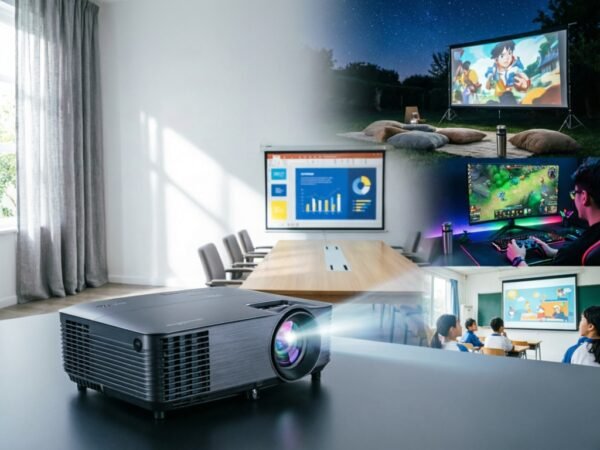
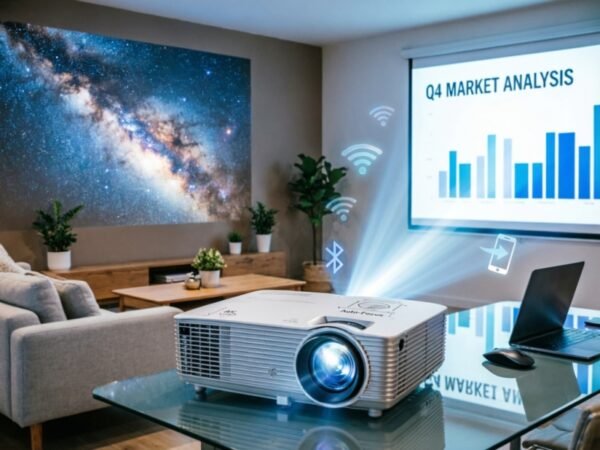
When choosing a projector, understanding the underlying display technology is crucial for making the right decision. The two dominant technologies in today’s market are LCD TFT (Liquid Crystal Display Thin Film Transistor) and DLP (Digital Light Processing). Each technology has distinct advantages and limitations that make them suitable for different applications and user preferences.
LCD TFT Technology Overview
How LCD TFT Works
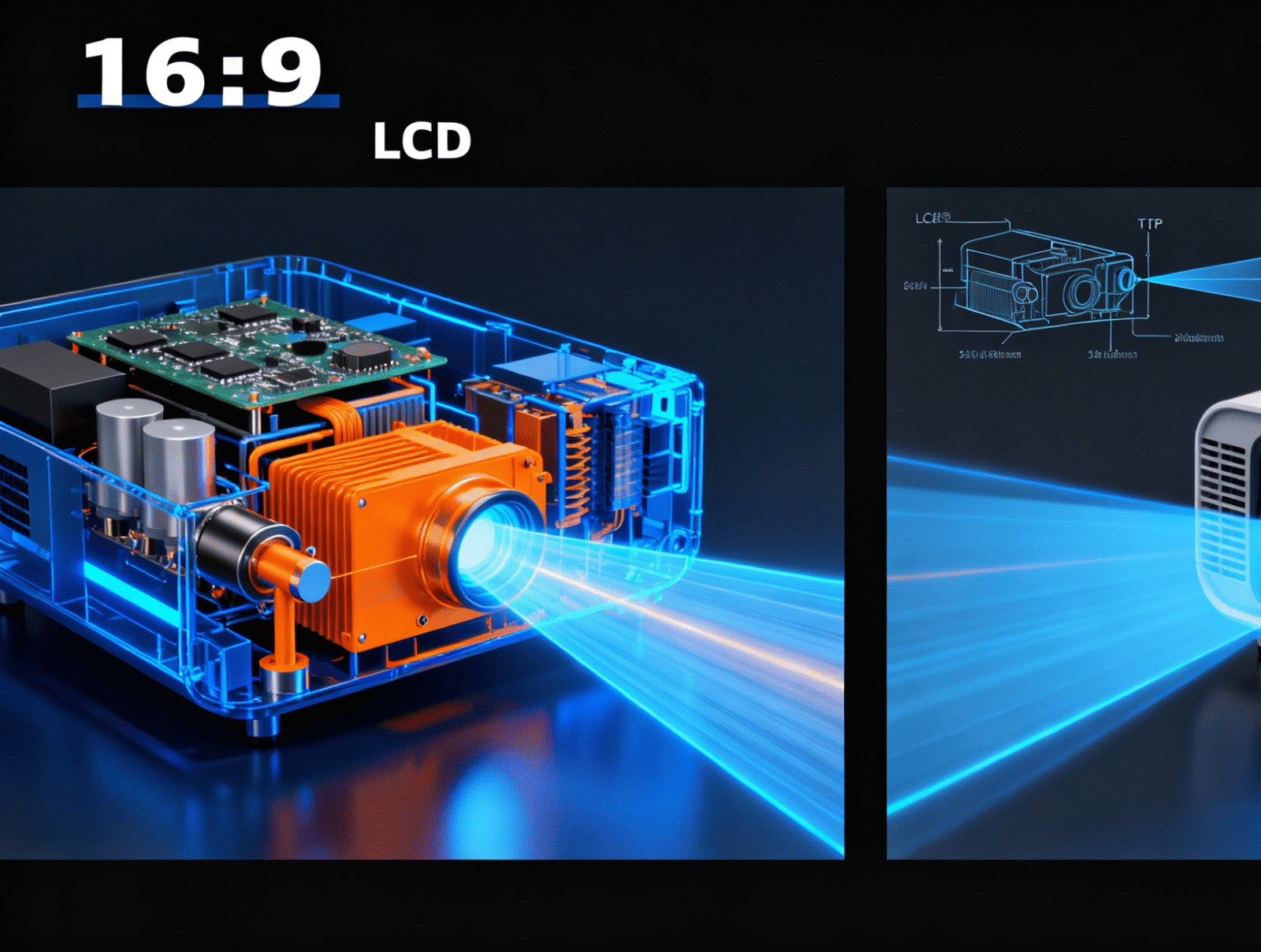
LCD TFT projectors use liquid crystal panels to create images:
- Light source passes through three separate LCD panels (red, green, blue)
- Liquid crystals twist to control light passage
- Color convergence combines the three colors to form the final image
- Lens system projects the combined image onto the screen
Key Components
- Three LCD panels (RGB)
- Dichroic mirrors for color separation
- Polarizing filters
- Convergence lens system
DLP Technology Overview
How DLP Works
DLP projectors utilize a Digital Micromirror Device (DMD):
- DMD chip contains thousands of tiny mirrors
- Mirrors tilt to reflect light toward or away from the lens
- Color wheel (single-chip) or three DMD chips (3-chip) create colors
- Rapid switching creates the perception of full-color images
Key Components
- DMD chip with micromirrors
- Color wheel (single-chip models)
- Light source (lamp, LED, or laser)
- Optical lens system
Detailed Comparison
Image Quality
LCD TFT Advantages:
- Superior color accuracy with natural color reproduction
- No rainbow effect – stable color display
- Better color saturation for vibrant images
- Consistent brightness across the entire image
DLP Advantages:
- Higher contrast ratios with deeper blacks
- Sharper text and graphics due to pixel structure
- Better motion handling with reduced motion blur
- More uniform image without visible pixel grid
Brightness and Light Output
LCD TFT:
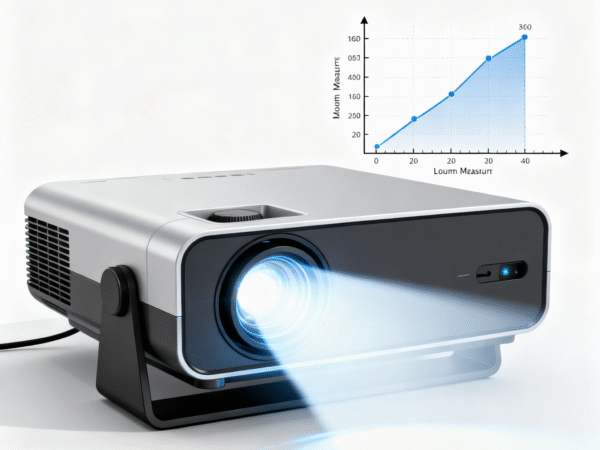
- Generally produces higher lumen output
- Better performance in ambient light conditions
- More efficient light utilization
- Suitable for large venue presentations
DLP:
- More consistent brightness over time
- Better light efficiency in newer models
- Superior performance in dark environments
- Excellent for home theater applications
Color Performance
LCD TFT:
- Wider color gamut capability
- More accurate skin tones
- Better color uniformity
- No color separation artifacts
DLP:
- Rainbow effect possible in single-chip models
- Excellent white balance
- Superior grayscale performance
- Better color stability over time
Durability and Maintenance
LCD TFT:
- Dust sensitivity – requires regular filter cleaning
- LCD panel degradation over time
- Color shift possible with aging
- More complex optical alignment
DLP:
- Sealed optical system – less dust infiltration
- Longer lifespan of core components
- Color wheel replacement may be needed
- Generally lower maintenance requirements
Use Case Recommendations
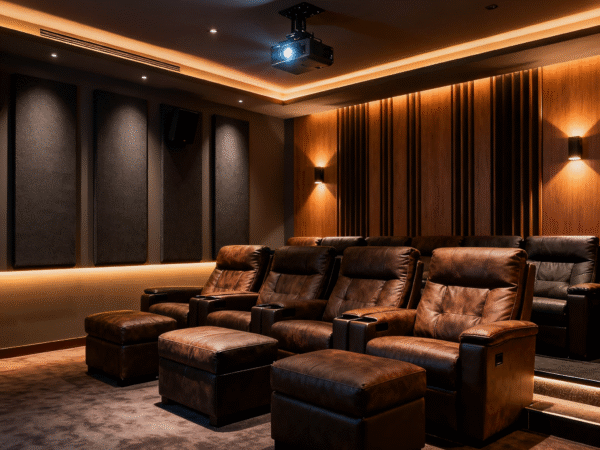
Home Theater
DLP Recommended for:
- Dark room viewing
- Movie enthusiasts prioritizing contrast
- Users sensitive to pixel visibility
- Long-term reliability preference
LCD TFT Recommended for:
- Multi-purpose family rooms
- Bright room viewing
- Color-critical applications
- Budget-conscious buyers
Business Presentations
LCD TFT Recommended for:
- Conference rooms with ambient light
- Color-rich presentations
- Large audience venues
- Frequent use scenarios
DLP Recommended for:
- Executive boardrooms
- Text-heavy presentations
- Portable presentation needs
- Professional image quality requirements
Education
LCD TFT Preferred for:
- Classroom environments
- Interactive whiteboard integration
- Budget considerations
- High brightness requirements
Gaming
DLP Recommended for:
- Fast-paced gaming
- Reduced input lag priority
- Dark gaming environments
- Motion clarity importance
Technology Trends and Future
LCD TFT Developments
- 4K native panels becoming standard
- Laser light sources improving brightness and color
- Advanced color filters for wider gamuts
- Improved dust resistance in newer models
DLP Innovations
- Laser phosphor light sources
- 4K pixel shifting technology
- RGB laser systems for premium models
- Smaller form factors for portable projectors
Cost Considerations
Initial Purchase Price
- LCD TFT: Generally more affordable in entry-level segments
- DLP: Higher initial cost but better long-term value
Total Cost of Ownership
- LCD TFT: Higher maintenance costs, filter replacements
- DLP: Lower maintenance, potential color wheel replacement
Lamp Replacement
- LCD TFT: Standard lamp replacement cycles
- DLP: Similar lamp costs, but newer models use LED/laser
Making Your Decision
Choose LCD TFT If You:
- Need maximum brightness for ambient light conditions
- Prioritize color accuracy for presentations or photos
- Have budget constraints
- Use the projector in dusty environments infrequently
Choose DLP If You:
- Want the best contrast ratio for dark room viewing
- Prefer sharp text and graphics
- Need a low-maintenance solution
- Plan to use primarily for entertainment
Conclusion
Both LCD TFT and DLP technologies have evolved significantly and offer excellent performance in their respective strengths. LCD TFT excels in brightness and color accuracy, making it ideal for business and educational use. DLP provides superior contrast and sharpness, perfect for home theater and professional applications.
The choice ultimately depends on your specific needs, viewing environment, and priorities. Consider factors like room lighting, content type, maintenance preferences, and budget when making your decision. Both technologies continue to improve, ensuring excellent projection quality regardless of your choice.
Stay updated with the latest projector technology comparisons and reviews on our blog.